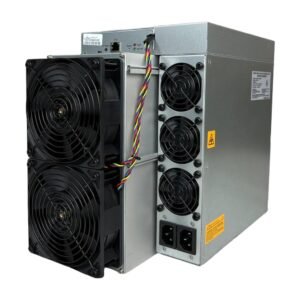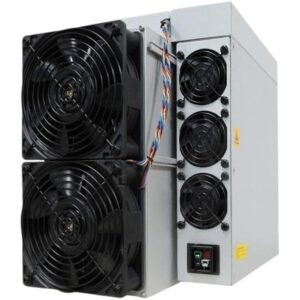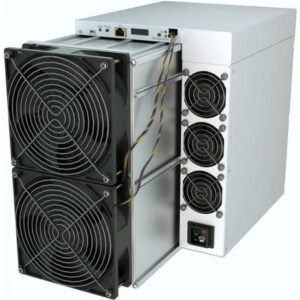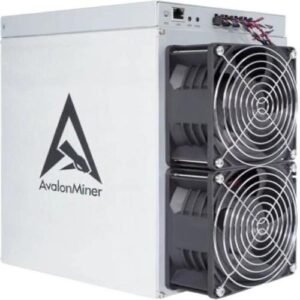
Bitcoin mining is the process of validating transactions and securing the network using specialized hardware. Profitability depends on Bitcoin price, mining difficulty, electricity costs, and hardware efficiency. Beginners should assess upfront costs, ongoing power usage, cooling needs, and long-term maintenance before purchasing mining equipment.
Bitcoin mining often feels like a mysterious blend of technology, finance, and a hint of enterprise-scale ambition. For beginners and hobbyists, the idea of buying a “miner” and getting paid in Bitcoin can be intriguing—but it’s not a guaranteed shortcut to riches. Understanding the basics first builds trust and reduces risk.
Bitcoin mining is a core function of the network’s security and transaction finality. It’s also a tangible way to participate in the broader crypto ecosystem, whether you’re experimenting as a hobbyist, running a small operation, or upgrading a home lab. As the industry matures, the technology behind mining—especially ASICs and power-efficient designs—continues to evolve.
In this guide, you’ll learn:
– What Bitcoin mining is and how it works
– Core concepts like hashrate, difficulty, and block rewards
– Pros and cons of mining at different scales
– How to estimate profitability and plan for energy use
– A practical, step-by-step approach to getting started
– Realistic guidance on choosing mining hardware
– Common mistakes to avoid and expert tips
– Current industry trends and what they mean for buyers
– How to shop for the right miner in our Bitcoin Miner Shop
What is Bitcoin mining? Definitions and core ideas
– Bitcoin mining is the process by which transactions are verified and added to the blockchain, and new bitcoins are issued as rewards to miners who contribute computing power.
– It uses specialized hardware to solve cryptographic puzzles, proving work has been done (Proof of Work). The first miner to solve a puzzle adds a new block of transactions and earns a block reward, plus transaction fees.
– Mining secures the network, confirms transactions, and creates new supply, subject to a predictable supply schedule that halves roughly every four years.
How mining works in practice
The cycle of blocks, rewards, and consensus
– Miners continuously compete to solve a cryptographic puzzle. The winner earns the right to add the next block to the chain and receives a reward (plus fees).
– The Bitcoin protocol adjusts difficulty roughly every two weeks to target an average 10-minute block interval, ensuring a steady issuance pace as total hashrate changes.
Key concepts you’ll encounter
– Hashrate: The computational power a miner contributes, measured in terahashes per second (TH/s) for Bitcoin ASICs.
– Difficulty: A dynamic parameter that reflects the network’s total computational power; higher difficulty means more work is required to win a block.
– Block rewards and fees: The incentive for miners; rewards decrease over time as part of the protocol’s design, while fees can add to earnings.
– Solo vs. pool mining: Solo mining offers full rewards but higher variance; mining pools aggregate power to provide steadier payouts, sharing rewards among participants.
Benefits and drawbacks of Bitcoin mining
Benefits
– Participation: A hands-on way to engage with the crypto economy.
– Potential returns: If planned and executed well, mining can generate Bitcoin over time.
– Learn-by-doing: From electrical setup to cooling strategies, you gain practical experience.
Drawbacks
– Upfront and ongoing costs: Hardware, power, cooling, maintenance, and potential downtime.
– Profitability is not guaranteed: It depends on Bitcoin price, mining difficulty, electricity costs, and hardware efficiency.
– Regulatory and environmental considerations: Electricity sourcing and local rules can impact feasibility.
How to estimate profitability: a practical framework
Profitability is influenced by four primary variables:
– Bitcoin price: A major driver of revenue in fiat terms.
– Network difficulty: Higher difficulty reduces the likelihood of earning rewards.
– Electricity costs: The largest ongoing operating expense for most miners.
– Hardware efficiency: Measured as energy per hash (e.g., J/TH); more efficient machines waste less electricity per unit of Bitcoin mined.
A simple profitability approach
– Revenue per day = (Expected blocks per day) × (Block reward + fees) × price of Bitcoin
– Power cost per day = Power consumption (kW) × hours per day × electricity rate
– Profit per day = Revenue per day − Power cost per day − any maintenance and hosting costs
Notes:
– Use a profitability calculator from your preferred provider to model different scenarios.
– Electricity costs and availability strongly affect outcomes; lower power rates can dramatically improve outcomes.
– Profitability is time- and price-sensitive; what looks good today may change with price swings and difficulty shifts.
Step-by-step guide to getting started
Step 1 — Assess your situation
– Location and climate: Consider ambient temperature and space for heat dissipation.
– Electricity: Determine your cost per kWh and the reliability of the supply.
– Budget: Decide how much you’re willing to invest initially and for ongoing costs.
– Goals: Are you exploring as a hobby, building a small business, or testing the waters before a larger purchase?
Step 2 — Decide your mining approach
– Home hobbyist: Lower-power, quieter, and more compact setups are often preferable.
– Small business or community operation: A dedicated space with robust cooling and power infrastructure is essential.
– Upgrade path: If you already own equipment, plan for a staged upgrade to improve efficiency without overcommitting capital.
Step 3 — Pick a miner type (and model, if possible)
– Types to consider:
– High-efficiency ASICs (the mainstream choice for Bitcoin)
– Mid-range ASICs for cost-conscious buyers
– Larger, lower-noise industrial units if you’re setting up a larger operation
– When possible, choose models with a favorable energy efficiency (J/TH) and a proven track record for reliability.
Step 4 — Plan for cooling and space
– Cooling is critical: air-cooled rigs require adequate airflow; liquid cooling can reduce room temperature and noise but adds complexity and cost.
– Space planning: Ensure power outlets, network connectivity, and ventilation are sufficient, and consider safety (fire risks, dust, humidity).
Step 5 — Setup and testing
– Install securely in a well-ventilated area.
– Connect to a stable power source with proper safety measures (surge protection, proper grounding).
– Test on a low hash rate, monitor temperatures and power draw, then scale up gradually.
Step 6 — Monitor and optimize
– Track hashrate, temperatures, and uptime.
– Use monitoring software and, if relevant, a profitability calculator to adjust for changing conditions.
– Plan for firmware updates, maintenance, and potential hardware replacement as needed.
Practical examples and real-world considerations
– Scenario A: A hobbyist with access to affordable electricity and a modest budget may prioritize lower-cost, mid-range ASICs and a compact footprint.
– Scenario B: A small business in a region with reliable power may invest in multiple efficient units and a dedicated cooling solution to maximize uptime and maintain stable heat dissipation.
– Scenario C: An investor evaluating a larger setup should consider ongoing electricity costs, space, and regulatory compliance in addition to equipment procurement.
Common mistakes to avoid
– Overestimating profitability: Don’t assume guaranteed returns; crypto markets fluctuate and difficulty adjusts.
– Underestimating power needs: Cooling, electrical infrastructure, and ventilation are often overlooked.
– Ignoring maintenance and downtime costs: Hardware fails, firmware updates may require downtime.
– Skipping due diligence on vendors: Ensure you buy from reputable sellers and verify warranties and return policies.
– Failing to plan for heat and noise: In residential settings, noise and heat can become a nuisance for neighbors and household members.
– Not using a profitability calculator: Always model different price and difficulty scenarios before purchasing.
Expert tips for readers at different stages
– Beginners: Start small, learn the basics, and use a profitability calculator to gauge potential outcomes before large investments.
– Hobbyists: Focus on noise, heat, and safety; choose an efficient, smaller-footprint rig.
– Small businesses: Build a robust cooling and electrical plan; consider pooling resources with partners for better contingencies.
– Experienced miners upgrading: Compare the latest efficiency metrics, lifecycle costs, and total cost of ownership; factor resale value and warranty coverage.
Latest industry trends and what they mean for buyers
– Efficiency over raw hashrate: Newer models emphasize lower energy consumption per TH, translating into lower operational costs.
– Supply chain and availability: Demand for ASICs remains high; expect longer lead times and potential price volatility.
– Regulation and energy policy: Jurisdictions increasingly scrutinize crypto mining power usage and environmental impact; consider local rules when locating a rig.
– Hosting and energy efficiency: Managed hosting and remote monitoring services gain traction as miners seek scalability with reduced in-house complexity.
– Green energy integration: Some operators pair mining with renewable energy sources or surplus power to optimize economics and sustainability.
Frequently asked questions (FAQs)
Q1: What is Bitcoin mining?
A1: Bitcoin mining is the process of validating transactions and adding them to the blockchain, powered by specialized hardware that solves cryptographic puzzles. Miners are rewarded with newly issued bitcoins and transaction fees.
Q2: How does mining profitability work?
A2: Profitability depends on Bitcoin price, mining difficulty, electricity costs, and hardware efficiency. It’s the balance of revenue from mined bitcoins and costs for electricity, maintenance, and cooling.
Q3: What is an ASIC miner?
A3: An ASIC (Application-Specific Integrated Circuit) miner is a dedicated device designed for a single task—mining Bitcoin with high efficiency—compared with general-purpose hardware.
Q4: How much electricity do miners use?
A4: Power usage varies by model and batch. Efficiency is often expressed as joules per terahash (J/TH); more efficient devices consume less power per unit of mining capacity.
Q5: Can I mine at home?
A5: Yes, many hobbyists start at home. Consider space, cooling, noise, and electricity costs. For larger operations, commercial hosting or dedicated facilities may be more practical.
Q6: How do I calculate profitability?
A6: Use a profitability calculator that inputs Bitcoin price, network difficulty, hash rate, power consumption, and electricity cost. Then compare across different hardware configurations.
Q7: What affects mining difficulty?
A7: Difficulty changes in response to the total network hashrate. When more miners join the network, difficulty increases; when some miners go offline, it decreases.
Q8: How often do miners become obsolete?
A8: Hardware becomes less competitive as newer, more efficient models are released. The pace varies, but staying informed about the latest efficiency improvements helps you plan replacements or upgrades.
Q9: What’s the difference between solo mining and pool mining?
A9: Solo mining offers potential for large, infrequent payouts but long periods with no earnings. Pool mining aggregates hashrate with others to provide more consistent, smaller payouts.
Q10: How should I choose a mining setup?
A10: Start with your budget, electricity cost, and space. Choose a model with solid efficiency, good reliability, and a reputable warranty. Use calculators and shop current listings to compare options.
3. Product Recommendation Section
Note: Specifications can vary by batch and firmware. Check current listings for exact figures. The following representative options are commonly used in the industry; consult the Bitcoin Miner Shop for up-to-date specs and availability.
Model: Antminer S19 Pro
– Best for: High-efficiency, large-scale operations
– Hashrate: 110 TH/s (typical range by unit, depends on batch)
– Power Consumption: ~3250W
– Why it’s recommended: Industry-standard efficiency and reliability; broad availability and established support network make it a go-to for serious setups.
Model: Whatsminer M30S++
– Best for: High hashrate with robust performance
– Hashrate: ~112 TH/s
– Power Consumption: ~3472W
– Why it’s recommended: Strong competitor to the S19 series with competitive efficiency and solid uptime; widely used in the field.
Model: Antminer S19 XP
– Best for: Top-tier efficiency for large operations
– Hashrate: ~140 TH/s
– Power Consumption: ~3010W
– Why it’s recommended: Among the most efficient high-hash devices available; excellent value for energy-conscious deployments, though availability can vary.
Model: Antminer S19j Pro
– Best for: Balance of cost, performance, and reliability
– Hashrate: ~104 TH/s
– Power Consumption: ~2920W
– Why it’s recommended: Reliable performer with good price-to-performance ratio; widely supported and easy to source.
Model: Whatsminer M50S
– Best for: Alternative high-end option with strong performance
– Hashrate: ~127 TH/s
– Power Consumption: ~3300W
– Why it’s recommended: Competitive efficiency in a different design family; good choice if inventory or supply variations occur with other models.
Important note on specifications: Figures above are typical ranges and may vary by batch, firmware, or regional variants. Always verify current specifications from the listing before purchase. If exact numbers are not available, the shop often provides a detailed spec sheet and power estimates to help you compare options
If you’re considering your first rig or upgrading an existing setup, visit our Bitcoin Miner Shop to:
– Compare different miners side by side
– View up-to-date specifications and performance data
– Check current availability and delivery timelines
– Find the right machine that fits your budget and power constraints
Our aim is to present transparent information so you can make informed decisions. You’ll find links to detailed product pages, compatibility notes, and hosting or support options that fit a range of needs. For additional help, you can also consult our Mining Guides or contact page.
Bitcoin mining remains a dynamic activity shaped by price levels, network difficulty, power costs, and hardware efficiency. For beginners and experienced miners alike, choosing the right equipment is a foundational decision. By understanding the basics, modeling profitability with real-world costs, and comparing current hardware options, you can set realistic goals and build a plan that aligns with your resources. The right miner is not a guarantee of profit, but a tool that, when used thoughtfully, supports your participation in the Bitcoin network.
If you’d like to explore options further, our Bitcoin Miner Shop is a logical next step after you’ve learned the basics. It offers a range of ASIC miners, up-to-date specs, and current availability so you can compare and purchase with confidence. For more context, you can also browse our Bitcoin Mining Guides, read ASIC Miner Reviews to understand real-world performance, or use a Profitability Calculator to model different scenarios. If you have questions or want to discuss your setup, don’t hesitate to reach out via our Contact Page.
On sale products
-
Antminer S19 Pro
Original price was: $7,200.00.$5,500.00Current price is: $5,500.00. -
Bitmain Antminer S19j Pro
Original price was: $2,500.00.$1,200.00Current price is: $1,200.00. -
Bitmain Antminer S21
Original price was: $8,500.00.$4,000.00Current price is: $4,000.00. -
Bitmain Antminer S21 Pro
Original price was: $6,500.00.$2,500.00Current price is: $2,500.00. -
Canaan Avalon A1566
Original price was: $7,850.00.$3,500.00Current price is: $3,500.00.